What is Summative Assessment? Meaning, Types and Examples

Key Takeaways
- Summative assessment checks what students learned at the end of a unit, term, or course.
- Tests are only one option. Projects, portfolios, presentations, and performance tasks often show far more.
- A clear rubric shared early makes grading fairer and takes much of the guesswork away for students.
- Formative checks guide learning along the way, while summative tasks confirm what actually stuck.
- Mixing formats gives every student a fair shot at showing what they really know.
The last week of a unit is always chaotic. Papers pile up, grades are due, and one question keeps nagging at you. Did my students actually learn this, or did they just cram it? That is exactly where summative assessment comes in, and how you design it matters more than most teachers expect. Below, we’ll cover what it means, the main types, real examples, and simple ways to build tasks that feel fair to everyone.
What is a Summative Assessment?
A summative assessment is a graded task that happens after teaching ends. It could close out a lesson, a unit, a semester, or a full course. The goal is simple. You want to see how well each student met the goals you set at the start. Those scores often feed into report cards, and sometimes into promotion or graduation decisions, which is why getting the design right feels like a big deal.
Summative Assessment Definition in Simple Words
Here is the summative assessment definition in plain language. It is a graded task that shows what a student has already learned, measured against a clear standard. A quick daily quiz usually does not count, because its job is to guide the next lesson, not to judge the last one. Final exams, big projects, and end-of-unit tests all fit the definition nicely.
What is the Purpose of Summative Assessment?
The purpose of summative assessment is not just to fill a gradebook. Done well, it tells teachers, students, and parents whether the learning goals were actually reached by the end of the unit. It also tells you something about your own teaching, which can sting a little but is incredibly useful.
- It measures mastery against the goals you set at the start.
- It gives you honest evidence for grades and report cards.
- It points out gaps in your lessons, so you can fix them before the next class arrives.
- It helps students look back and see how far they have come since day one.
Summative Assessment vs Formative Assessment
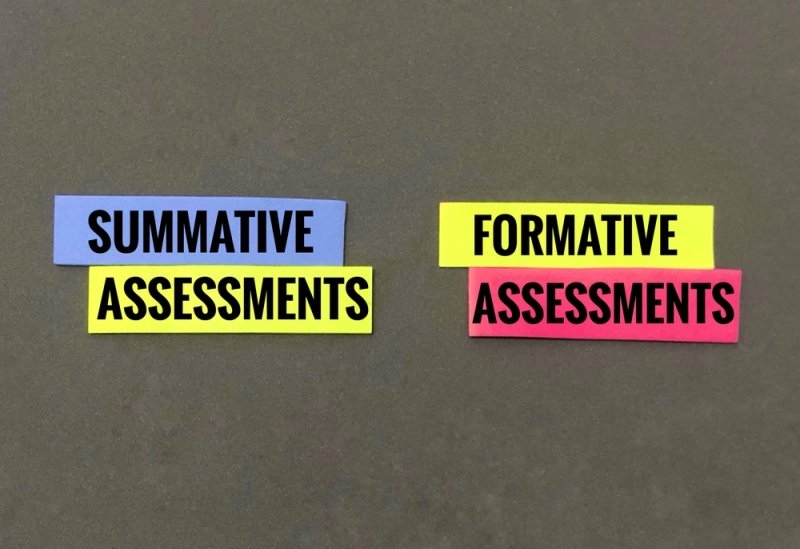
People mix these two up all the time. Formative assessment happens while students are still learning. Summative assessment happens after. One is a coach calling out tips during practice, and the other is the actual game.
| Feature | Formative Assessment | Summative Assessment |
| Timing | During the lesson or unit | After the unit, term, or course |
| Main goal | Guide and improve learning | Measure final achievement. |
| Grade weight | Low or none | Usually high |
| Feedback | Quick and ongoing | Often delivered after the unit ends |
| Examples | Exit tickets, polls, drafts | Final exams, projects, portfolios |
Neither one is better. You need both. When formative checks run all term long, the summative task rarely brings any nasty surprises for students or for you.
What are the Types of Summative Assessment?
There are plenty of ways to check learning at the end of a unit, and the best pick depends on the skill you want to see. These are the main types of summative assessment, and they work across most grades and subjects.
1. Unit Tests and Final Exams
Traditional tests are not the enemy. They are quick, they are fair across a big group, and parents understand them. The trouble starts when a test only asks for definitions and dates. Add a few open-ended questions where students must explain their thinking. Suddenly you are measuring understanding instead of memory.
2. Projects
Projects give students room to research, build, or design something over several weeks. A science experiment or a community survey works well here. Kids tend to care more about work they created themselves. Hand out the rubric on day one, so nobody is guessing what a strong project looks like.
3. Portfolios
A portfolio collects a student’s best work across a unit or semester. Students can flip back through it and actually see their progress, which is a surprisingly powerful moment. For you, it shows patterns in strengths and weaknesses that one exam would never catch. It takes more time to review, but it is worth it.
4. Presentations
Presentations let students explain ideas in their own voice. That might be a short talk, a poster, or a two-minute video. They also build confidence and communication skills that last well beyond your classroom. Ask classmates to fill in a quick feedback checklist, which keeps the audience engaged instead of staring out the window.
5. Performance Tasks
Performance tasks drop students into a realistic situation and ask them to solve a real problem. A math class might plan a school fundraiser budget. An English class might write a letter to the mayor about a local issue. Students see right away why the lesson mattered outside of school.
Top Pick: What are the Types of Teaching Methods for Better Learning?
Examples of Summative Assessments in the Classroom
Sometimes you just need to see an idea in action. Here are some summative assessment examples you can borrow or tweak for your own students. Every subject has options, even the ones that usually default to a written test.
Summative Assessment Examples by Subject
- Math: Students design a class garden budget and defend every cost using ratios, percentages, and basic equations.
- Science: students plan and run an experiment, then present their data and conclusion.
- English: students write a persuasive essay or record a short podcast about a book theme they care about.
- Social studies: students build a timeline and argue which event changed their community most, using primary sources.
- Art or music: students submit a final piece with a short note explaining their creative choices.
Each of these asks students to use what they learned, not just repeat it.
How to Create a Summative Assessment?
Building a strong task takes some planning, but a clear process keeps it manageable. Follow these four steps to create a summative assessment that truly matches what you taught in class.
1. Start With Clear Learning Goals
Write down what students should know and be able to do by the end of the unit. Keep it short and specific. Then check every question or task against that list. If something does not connect, cut it. This one habit stops you from writing trick questions that confuse students and prove nothing at all.
2. Choose a Task That Fits the Skill
Match the format to the skill. A multiple-choice test cannot show creativity. A big project might not tell you whether a student knows basic facts. If you are torn, use two formats together. The combined results usually tell a much fuller story about each student.
3. Build a Simple Rubric
A rubric lists what you are grading and what each level looks like. Keep the language simple enough that a student could read it alone. Three to five criteria and four levels are plenty. Share it before students begin, so nobody has to guess what you want from them.
4. Test the Task Before You Use It
Try the task yourself first, or ask a colleague to look it over. You will catch confusing wording and bad timing fast. After the assessment, look at which questions many students missed. That often points to unclear teaching, not lazy effort. Small fixes, like clearer directions, make the next round better.
Effective Summative Assessment Strategies for Teachers
Good design is only half the battle. How you roll out the task affects whether students feel capable or terrified. These summative assessment strategies keep results accurate while keeping stress low.
- Mix formats across the term, so students with different strengths all get a chance to shine.
- Share the rubric and one strong sample early. Students aim better when they can see the target.
- Offer choices where you can. A poster, a video, or an essay can all prove the same thing.
- Add a short reflection. Two or three sentences on what worked and what they would change is plenty.
- Plan accommodations ahead of time, so results reflect learning and not barriers.
Must Read: Inclusive Teaching Strategies For More Equitable Classrooms
Creative Summative Assessment Ideas for Teachers
Not every end-of-unit task needs to be a test paper. Fresh formats keep students curious, and they often show talents that a written exam never would.
Simple Summative Assessment Activities to Try This Term
These summative assessment activities need very little prep, but they still give you solid evidence of learning.
- Teach-back lessons, where a student explains one concept in ten minutes and fields tough questions from classmates.
- A class museum, with models or artifacts and labels that explain each one in simple words.
- Podcasts or news reports that explain a key idea to a younger audience.
- Board game design, where players answer questions from the unit to move forward.
- Mock trials or debates that make students defend a position with evidence from the whole unit.
Pair any of these with a rubric, and grading stays objective.
Conclusion
A strong summative assessment measures real understanding, not just the facts a student managed to memorize for one test. Start with clear goals, pick a task that fits the skill, and share your rubric before the work begins. Mix tests, projects, portfolios, and presentations so every learner can show success in a way that suits them. So which new idea will you try in your classroom this term?
Frequently Asked Questions
What is a summative assessment in simple terms?
It’s the final check on learning. Teachers give it after a lesson, unit, or course ends, and the score usually counts toward a grade. It shows whether students got what you taught.
What are some examples of summative assessments?
Think final exams, unit tests, research projects, portfolios, and oral presentations. Performance tasks count too, like planning a budget or writing to a local official. Choose whatever format fits the skill you’re measuring.
How is summative assessment different from formative assessment?
Formative assessment happens while students are still learning, so it helps you adjust your teaching. Summative assessment comes afterward and measures what stuck. It also usually carries far more weight in final grades.
How often should teachers use summative assessments?
Most teachers give one at the end of each unit, plus a bigger one each term. Don’t overdo it, though. Too many high-stakes tasks stress everyone out, so mix in quick, low-stakes checks.
Can summative assessment be creative and still fair?
Absolutely. A podcast, a mock trial, or a class museum can work as well as a test. Just tie every task to the same learning goals and grade with one shared rubric.
This content was created by AI