Which Art Projects for Elementary Students Spark Creativity?

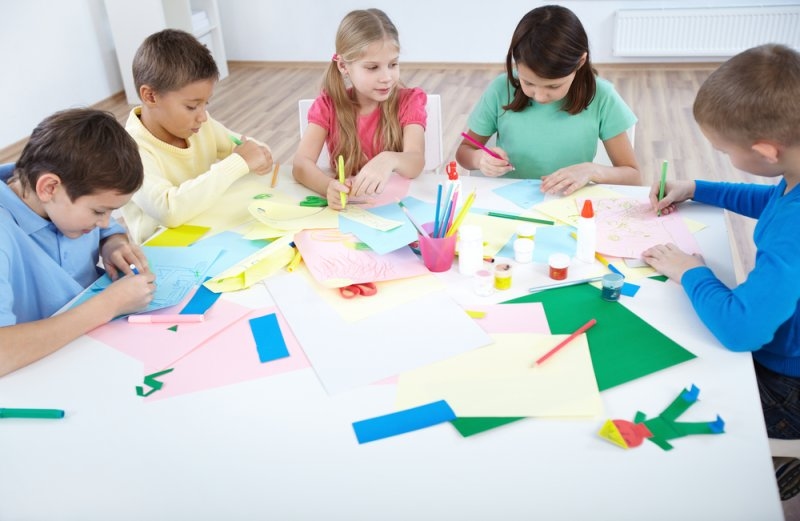
Elementary school art projects do more than keep students busy! They’re the fuel for imagination, the practice field for problem-solving skills, and a kid-friendly way for kids to express their thoughts. Did you know that studies by the National Endowment for the Arts found that kids with consistent access to arts learning typically engage in stronger critical thinking, collaborate more in class, and become more involved in their schools?
The even better news is you don’t need expensive art supplies and complex lesson plans to provide stimulating and memorable learning opportunities. A simple project can inspire kids while connecting with their classroom learning across subjects like science, math, language arts, and social studies. Continue on to get inspired by 10 fun and easy-to-organize art-craft projects for elementary students that work across all grade levels:
1. Nature Collage Creations
Take your students outside on a nature walk to collect leaves, flowers, small twigs, and stones. Then have them bring them back to the classroom to arrange into creative collages. This lesson gives students the chance to learn about texture, composition, and observational skills while helping them get to know the natural world, and it can support science topics about plants.
Materials Required:
- Leaves
- Twigs
- Construction paper
- Glue
- Markers
2. Watercolor Silhouette Art
This colorful, two-step art lesson combines simple design skills and watercolor painting techniques. First, students create watercolor paintings on paper using their favorite color schemes. Then, after the paper has dried, they cut and paste a black paper silhouette of an animal, tree, skyline, or a popular book character on top for visual contrast.
3. Storybook Character Puppets
Make reading time into an art lesson! Students choose a favorite book character or a few characters and draw them on construction paper, then cut them out and attach them to sticks or paper bags with tape. They then use their characters and puppets to act out a few scenes from the book.
This is the perfect curriculum-based craft because it encourages reading skills, creativity, and performance!
4. Symmetry Butterfly Paintings
Folded butterfly paintings make it easy and engaging to teach students about symmetry while encouraging them to experiment with color mixtures. Students paint designs on one side of a fold, press the paper together, then unfold to reveal their artwork. Children are sure to find butterflies that are fun and exciting to paint!
Plus, this painting encourages learning basic vocabulary through the use of symmetry.
5. Recycled Robot Sculptures
Save cans, plastic bottles, caps, boxes, and even old clothes, and let your children’s imaginations run wild! Students experiment with construction and problem-solving skills as they construct a robot sculpture by piecing together disparate recycled materials. This is a perfect project to have meaningful discussions about recycling, sustainability, and environmentalism with kids.
6. Mosaic Paper Landscapes
Instead of using paint or markers, children create colorful landscapes using tiny pieces of cut-up colored paper. They cut out small squares and rectangular strips of Construction Paper and glue them onto the Construction Paper to build mountains, lakes, forests, or cities. This artwork will help kids develop fine motor skills and introduce composition and color theory!
7. Self-Portraits With Mixed Media
Help kids hone their observational skills and their understanding of self-expression through a personalized art lesson. Students will have a blank piece of Construction Paper ready for their self-portraits, encouraging them to use crayons, markers, colored pencils, fabric scraps, or whatever else they have on hand in your classroom to create an iconic self-portrait!
Personalize their self-portraits by including some of their favorite colors, shapes, symbols, or activities, and they will love seeing their unique creations!
8. Cultural Pattern Designs
Students learn about the various, inspiring artwork and patterns from cultures around the world before beginning a new artistic endeavor. After discussing a country's unique styles, students design and create a similar work of art—but with their own artistic touch! These two- or three-day lessons help inspire and support children as they engage in world geography and cultural education.
9. Seasons Tree Painting
Help children create one-dimensional trees with each quadrant of their paintings representing one of the four seasons. Students will learn to represent Spring's blooming trees, Summer's dense foliage, Autumn's colors, and Winter's snow-covered limbs, thereby connecting the visual arts to a lesson on nature's changes.
10. Collaborative Classroom Mural
To round out the semester or a block of learning units, have every student contribute to the creation of a huge mural!
Assign each student one piece of the canvas or a section on the wall to complete—perhaps with a themed mural like a community—while all remaining pieces have their own unique individual vision, but they stay connected in some way (for example, the four seasons or ocean life).
This project also promotes teamwork, planning, communication, and ownership.
How To Select The Best Preschool/Elementary Art Activities?
Not all art activities fit in every art classroom. Below are a few questions to consider when choosing art projects for elementary students that will help bring your art lessons to life!
- Do they suit your child’s ability or your child’s developmental stage?
- How much time will you have for the art project?
- Will this project meet your classroom goals and objectives?
- How much will it cost to acquire the required materials for your students to take home or complete in your classroom?
- Could there be a cross-curricular connection with this project?
Tips for Making Your Class Art Lesson More Successful
Whether you’re in a classroom, a one-room house, or the backyard, here are some quick art room tips and art project ideas to make any creative endeavor more successful:
- Allow students to choose in their work.
- Let their imaginations guide the artwork as they create it!
- Put the children’s finished artwork up for display around the classroom—everyone loves to feel appreciated!
- Incorporate new creative ideas and projects that align with classroom topics of study and discussion.
- Encourage cooperation when appropriate—sometimes teamwork helps ignite brilliant results!
And last but certainly not leas. Remember to celebrate the effort your kids put forth, not just their perfect productions.
Conclusion
The best elementary classroom activities and art lessons offer more than just filling time. Whether kids are building silly recycled robots, illustrating famous literary figures, designing abstract nature scenes, or contributing to a class project that honors community, these creative opportunities foster important skills beyond the art room, including self-expression, problem-solving, and creativity.
Teachers will find that incorporating various kinds of curriculum-based craft projects can support student learning and create lasting, memorable learning opportunities.
FAQs
What’s the Appropriate Amount of Time an Elementary Classroom Art Project Should Take?
Elementary classroom art projects should be fun, rewarding, and within a reasonable timeframe. Typically, a complete elementary art ideas may take only 30–60 minutes from start to finish. However, some more complex projects can be spread over multiple lessons, allowing time for drying and other details without overwhelming the children.
Can Elementary Art Lessons Be Modified for All Ability Levels?
Absolutely! The beauty of art for kids is its adaptability. With simple adjustments to instructions, provided templates or visual aids, and options in materials, teachers can ensure that young artists of all ability levels and ages can successfully and creatively engage in elementary school art activities. Students can always be challenged to add more detail or explore additional creative choices that match their particular skill level.
Why Process Over Product For Preschool/Elementary Art Ideas?
The creative process is truly magical! It is a window into your student’s experience, where he/she plays with ideas, experiments, makes choices, solves problems, and develops his/her motor and visual-motor skills without the pressure to have a “perfect” final result. When you prioritize the process over the final product, you give your students the ability and self-confidence to become creative, problem-solving thinkers who are confident in producing their own unique artwork.
This content was created by AI