What are the Top 10 Paper Crafts for Kids as Learning Activities?

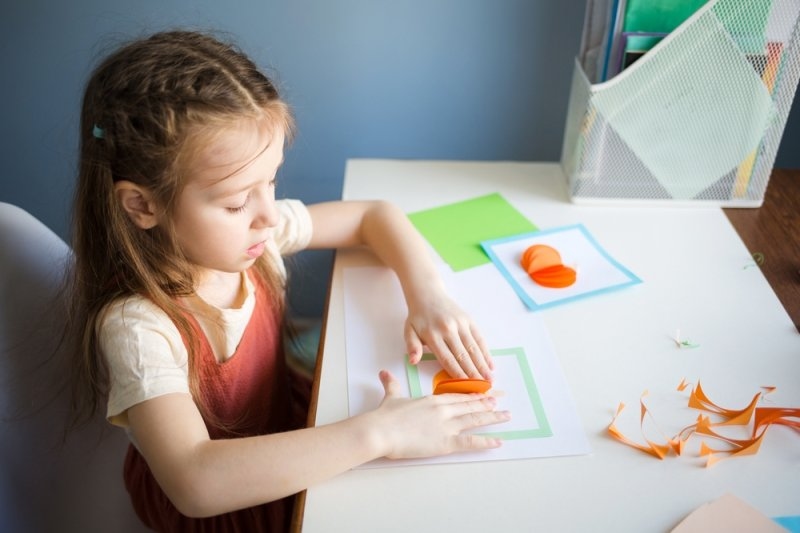
Paper crafts for kids are proof that creativity can be both inexpensive and easy. All it takes is a few sheets of paper and some creativity to transform an ordinary afternoon into an engaging learning experience. These projects can appeal to parents seeking screen-free options for their children or to teachers seeking fun classroom activities.
Studies conducted by the National Endowment for the Arts, for example, have shown that hands-on activities such as paper crafts promote creative thinking, critical reasoning, and problem-solving skills in young learners. Moreover, they only require paper and can be easily and cheaply recreated at almost any home.
Paper crafting requires no complex tools or messy materials, making it very simple. In this article, we will highlight a variety of paper crafts that are fantastic for learning, ranging from origami for beginner kids to recyclable paper crafts.
Why Paper Crafts are Great for Kids?
It is worth looking at the reasons paper crafts are popular among educators and parents alike:
- Paper crafts develop fine motor skills.
- Using paper in crafts also improves hand-eye coordination.
- Creativity is greatly enhanced.
- Concentration levels are boosted.
- Paper crafts develop problem-solving skills.
- Spatial reasoning is improved through the use of paper to create shapes.
Math, geometry, science, and storytelling are just some of the skills that can be taught through various paper crafts. They are also usually inexpensive and easy to put together. Here are some of the paper crafts for kids to try:
1. Simple Origami Animals
The best thing about origami, as with most other forms of paper crafting, is that it allows the transformation of a flat, seemingly boring sheet of paper into an object.
Some easy origami animals that young crafters may enjoy making include dogs, cats, fish, and frogs.
Kids love origami because they get to watch their flat paper morph into recognizable shapes. This kind of craft is a wonderful tool for older children who can follow instructions, as it forces them to develop skills such as patience, observation, and spatial reasoning. Even something as simple as paper-folding projects can enhance the child's knowledge of geometrical concepts.
2. Paper Airplanes
Paper airplanes offer a fantastic, time-honored paper craft for children that is both artistic and practical; tests of the best design for the longest distance can develop skills in observation, problem-solving, measurement, engineering, and aerodynamics.
3. Paper Fortune Tellers
Paper fortune tellers, or cootie catchers, are another popular and engaging classroom craft, which children often use to reinforce math, vocabulary, and social studies skills.
These can bring a lot of fun for children while improving language, confidence, and knowledge of folding techniques and creativity.
4. Paper Chain Challenges
Paper chains can be made simply by folding or cutting paper into strips. Counting, patterns, and sequences, along with measurement, are just a few concepts that children learn on their first encounter with paper chains. These make great decorations for holidays and special events.
5. Paper Puppets
Paper puppets encourage imagination and role-play, providing children with opportunities to act out scenarios and develop their creativity, communication, and language skills.
Puppets can boost a child's confidence and are an effective way to encourage children, particularly younger ones, to express themselves.
6. Paper Boats
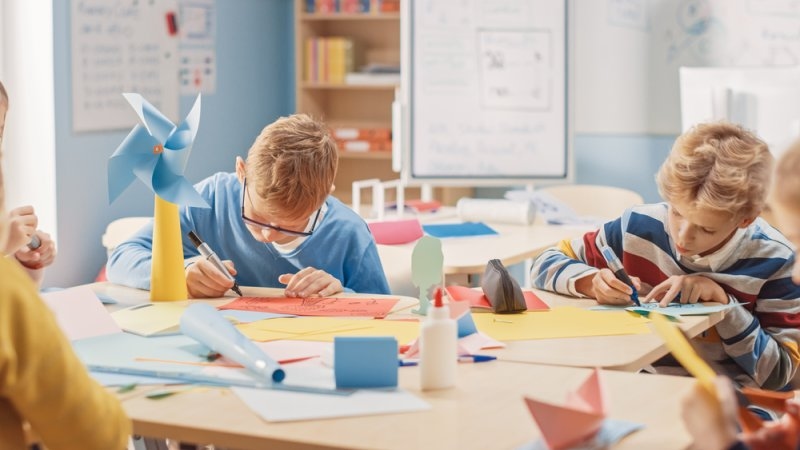
Paper boats are classic paper-folding crafts that continue to inspire fun for people of all ages and offer great potential for teaching engineering and design concepts. It is a very easy classroom craft to introduce kids to basic principles of engineering, design, and cause-and-effect relationships to young learners through building paper boats, since different folds clearly affect performance.
7. DIY Bookmarks
A DIY bookmark is one of those crafts that children can actually use. Children can express their creativity on the bookmark with colorful drawings, quotes, and their own personal designs. Bookmarks can improve children’s language and motivation to read, as well as their fine motor skills, making them effective literacy craft materials in the classroom.
8. Paper Mosaic Art
Paper mosaic art involves using small bits of paper in various colors and shades to create detailed pictures or shapes. This activity can really develop patience and careful observation, and it helps children enhance their color recognition, pattern recognition, and fine motor skills.
9. Recycled Newspaper Crafts
Newspapers are plentiful and versatile craft materials. Paper can be cut, twisted, rolled, or folded in different ways to make newspaper sculptures, hats, flowers, baskets, or any number of other imaginative designs.
Environmental responsibility can be taught to kids through recycled paper crafts for kids.
10. Paper Shape Puzzle
Using the fun activity of assembling shapes to create either a picture or an established shape will help teach kids basic shapes and geometry.
Critical thinking skills, problem-solving, geometry, and shape recognition can all be improved as children build and create puzzles.
Tips for Successful Paper Craft Sessions
Follow these useful guidelines to make the most out of paper craft activities for parents and kids together:
Begin Simple: Start off with the basics before introducing complex designs.
Encourage Creativity: Let children choose their own materials and personalize projects however they see fit, as there isn't necessarily a single right way of completing a craft.
Use Recycled Materials: Old magazines, newspapers, and scrap paper are all wonderful, cost-effective resources.
Focus On The Process: The aim is to ensure children enjoy the craft process itself rather than worry about the final product, because that is where the learning really comes in.
Why Do No-Mess Crafts Appeal To Parents and Teachers?
The easiest aspect of most paper crafts is undoubtedly the lack of mess compared to materials like paint or glue. This makes them the perfect resource for use in classrooms, libraries, after-school programs, and family nights at home.
Conclusion
Paper crafts for kids offer an affordable, engaging, and effective avenue for children to improve their creativity and enhance fundamental skills such as problem-solving, fine motor skills, and imagination.
From Origami animals to paper boats, a variety of crafts are available to introduce children to STEM through creative activities. The following websites are great places to find children’s craft resources and useful, innovative educational ideas: EducationalCraft.com.
Frequently Asked Questions
Can Kids of Any Age Start to Make Paper Crafts?
Children aged 3 and above can participate in simple paper crafts with the assistance of an adult. Youngsters will benefit from such activities like paper tearing and folding. Complex craft ideas require dexterity and problem-solving skills and will likely capture an older child's attention.
Are Paper Crafts STEM-related?
Yes, many paper crafts will support the introduction of STEM principles. Such crafts teach the basics of engineering, geometry, measurement, symmetry, and design thinking. For example, building a paper airplane or a shape puzzle would support a child's STEM learning experience through hands-on problem-solving.
How Can Parents Encourage Kids to Keep Crafting over a Longer Term?
Multiple activity ideas will keep children interested: Children will stay motivated to complete the crafts as long as there are seasonal themes to work with, and they are given the freedom to choose which design to make. Incorporating crafts into storytelling or into a science lesson will also keep children interested and encourage creative development over a sustained period.
This content was created by AI