Best STEM Activities For Kids To Make Science Fun

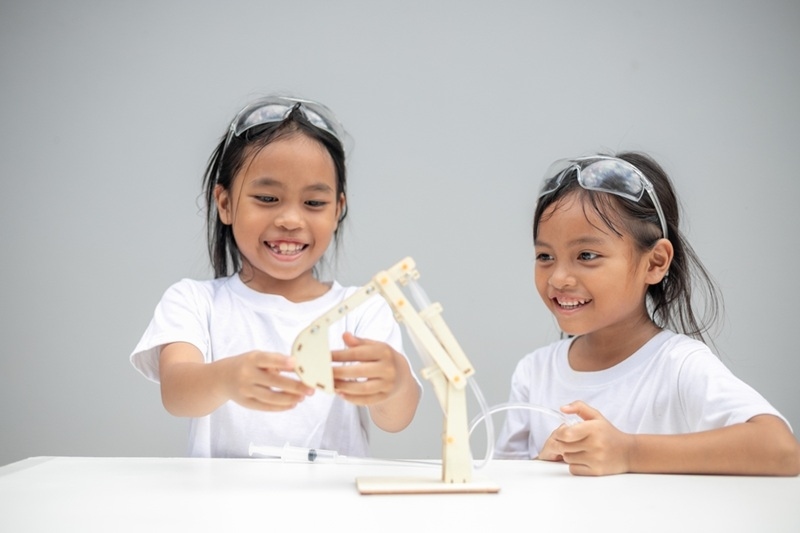
Children learn a lot when they are allowed to touch, build, spill, test, guess, and try again. That is the nice thing about STEM. It does not have to look like a serious classroom lesson. Sometimes it looks like a child dropping a paper bridge five times until it finally holds a toy car. Sometimes it looks like vinegar bubbling over a tray while everyone laughs and grabs paper towels.
That is why STEM activities for kids work so well at home and in classrooms. They turn science, technology, engineering, and math into something children can actually feel. Not just read. Not just memorize. Feel.
The best part is that parents do not need expensive kits for every activity. A few cups, paper clips, straws, cardboard, tape, water, coins, baking soda, and toy blocks can create a full afternoon of learning. Slightly messy, maybe. But useful.
How To Make STEM Activities for Kids Feel Easy At Home?
Parents sometimes avoid STEM because it sounds too academic. It does not have to be. A good activity can be short, cheap, and a little imperfect.
Helpful habits include:
- Use household items first
- Let kids guess before testing
- Ask “What do you think will happen?”
- Avoid fixing everything too quickly
- Keep cleanup simple
- Let the child repeat the activity
- Celebrate weird results
The goal is not a perfect project photo. The goal is thinking.
Why STEM Learning Works Better When Kids Do It Themselves?
Children can hear an explanation ten times and still not care much. But let them build a tower that keeps falling, and suddenly balance matters. Let them mix colors in water, and suddenly observation matters. Let them race balloon cars across the floor, and suddenly force and motion become real.
That is the power of hands-on learning for children. It gives them a reason to ask questions. Why did it fall? Why did this float? Why did the balloon car go sideways? Why did the ice melt faster on the metal tray?
Those little questions are the beginning of scientific thinking. Nobody needs to make it sound fancy. Curiosity is enough.
1. Build A Paper Bridge
A paper bridge is simple and surprisingly fun. Give children paper, tape, and two stacks of books. The challenge is to build a bridge that can hold coins, toy cars, or small blocks.
They can fold the paper, roll it, layer it, or try different shapes. Most first bridges collapse quickly, which is honestly part of the fun. Then the child changes the design and tests again.
This is one of the easiest engineering activities for kids because it teaches strength, shape, weight, and problem-solving without needing special materials.
What Kids Learn
They learn that flat paper bends easily, but folded paper can become stronger. They also learn that failure is not the end of the project. It is just information.
2. Try A Sink Or Float Test
A bowl of water and random household objects can turn into a full science activity. Children can guess whether each item will sink or float, then test it.
Use safe objects like a spoon, cork, toy block, leaf, coin, plastic lid, sponge, and small ball. Older children can sort items by material or weight before testing.
This is one of those science experiments for kids at home that works even with younger children. It is simple, but it opens the door to ideas like density, material, shape, and prediction.
3. Make A Balloon-Powered Car
A balloon car usually gets a big reaction. It may not go straight. It may spin. It may bump into a chair. Still, kids love it.
Use a small cardboard base, bottle caps or toy wheels, straws, tape, and a balloon. Blow up the balloon, attach it to the car, let it go, and watch the air push the vehicle forward.
This is a great example of fun STEM ideas for kids because it feels like a toy, not a lesson. Children can change wheel size, balloon size, or car weight and test what happens.
4. Grow Beans In A Jar
This one takes a few days, which is good for patience. Put a damp paper towel inside a clear jar, tuck a few beans between the towel and glass, and place the jar near sunlight.
Children can check the beans every day and draw what they see. First nothing. Then a tiny crack. Then a root. Then a sprout. It feels almost magical if they have never watched it closely.
For younger children, this becomes a nature observation activity. For older ones, it can become a mini plant science project with notes about water, light, and growth.
5. Create A Cup Tower Challenge
Give children paper cups, plastic cups, or blocks and ask them to build the tallest tower possible. Then add a twist. Can it stand for ten seconds? Can it hold a small toy on top? Can it survive a gentle fan breeze?
This is one of the most flexible STEM projects for elementary students because it works for different ages. Younger children focus on stacking. Older children start thinking about base width, balance, and stability.
Make It A Team Activity
If two children are working together, they also practice communication. One wants the tower taller. The other wants it stronger. That little debate is learning too.
Read Next: Test Anxiety in Kids: Signs and How Parents Can Help?
6. Make A Simple Pulley
A basic pulley can be made with string, a small basket, and a rolling pin, hanger, or sturdy rod. Children can place small toys in the basket and pull the string to lift it.
This activity introduces simple machines in a very clear way. A child can feel how pulling down makes the basket go up. That is better than only reading about pulleys in a textbook.
For safe indoor play, keep the objects light and the setup low.
7. Build A Marble Run
A marble run can be made with cardboard tubes, paper towel rolls, tape, and a wall or large box. Children arrange the tubes so a marble travels from top to bottom.
At first, the marble may fall out. Then it may get stuck. Then it may fly too fast. Perfect. That means they are learning angle, speed, gravity, and design.
This is one of the more exciting STEM activities for kids because it feels like a puzzle that moves. Children keep adjusting because they want the marble to make it all the way down.
8. Make Color Mixing Ice Cubes
Freeze water with food coloring in ice cube trays. Then place different colored cubes in clear cups and let children watch them melt and mix.
Red and yellow become orange. Blue and yellow become green. Some colors look muddy when mixed too much, which children usually find funny.
This activity blends science and art. It teaches melting, temperature, color mixing, and observation. It is also calm enough for a slow afternoon.
9. Design A Boat From Foil
Give kids some aluminum foil and see if they can build a boat that will float with pennies. They test by folding, cupping, flattening, or reshaping the foil.
The first boat may sink after two coins. The next may hold ten. The next may hold more if the child spreads the weight better.
This is another strong pick for engineering activities for kids because it teaches design thinking in a very hands-on way. It also gives quick feedback. The boat either floats or it does not.
How Teachers Can Use STEM In Simple Ways?
Teachers can turn small classroom moments into STEM practice. A rainy day can become a water cycle talk. A broken pencil sharpener can become a design conversation. A paper airplane contest can become a lesson in shape and air.
For STEM projects for elementary students, the best activities usually have clear materials, open-ended choices, and room for mistakes. Children should not all have to produce the same result. If every bridge looks identical, there was not much experimenting.
Check Out: 9 Sensory Activities For Kids With Autism At Home
Final Thoughts
STEM does not need to feel like extra homework. It can feel like building, guessing, laughing, and trying again. Paper bridges, balloon cars, bean jars, marble runs, and foil boats all teach real skills without making children sit still for too long.
The best science experiments for kids at home are simple enough to get started quickly, and flexible enough to be repeated in new ways. That’s where the real learning takes place.
When kids get hands-on learning, they do more than just complete an activity. They learn to wonder, and test, and adjust, and persevere. That’s the real value behind the best fun STEM ideas for kids.
FAQ
1. What Age Is Best To Start STEM Activities?
Children can start simple STEM play as toddlers, as long as the materials are safe and age-appropriate. A toddler pouring water between cups is already exploring volume and cause and effect. Older children can handle more planning, measuring, and testing. The activity should match the child’s attention span, not a strict grade level.
2. Do Parents Need To Explain The Science Every Time?
No, not always. Sometimes too much explaining kills the fun. A parent can ask small questions instead, like “What changed?” or “Why do you think it fell?” If the child is interested, explain more. If not, let the play do some of the teaching. Curiosity usually grows better when it is not pushed too hard.
3. What If A Child Gets Frustrated During STEM Projects?
That happens, especially when towers fall or experiments do not work the first time. The adult can help by saying, “That design gave us a clue,” instead of calling it wrong. A short break also helps. Some children need time before trying again. STEM is partly about learning that mistakes are useful, not embarrassing.
This content was created by AI