How To Teach Your Child To Read With Fun Activities At Home!

Quick Takeaways:
- Kids pick up phonemic awareness naturally when you sing songs or recite nursery rhymes together.
- Playing card games doesn’t just pass the time—children end up learning letter sounds without even realizing it.
- Word games can spark a love for language, no books needed.
- Reading aloud isn’t just a bonding activity; it actually helps kids understand stories and makes them smoother, more confident readers.
- Making letters out of play-dough? That’s alphabet learning disguised as playtime.
Honestly, it’s never too soon to introduce your child to reading. The ability to read can open up whole new opportunities for children. It offers a source of enjoyment and pleasure as well as a world of learning and potential. It is an important factor for the development of the brain and the key to success.
However, it doesn’t develop organically overnight. Reading requires explicit guidance grounded in the Science of Reading. Instead of having kids “prize peck” words just by looking at pictures, parents should stick with structured, phonics-based approaches that teach kids to decode words correctly.
If you're wondering how to teach your child to read and get them started on their reading journey, then this guide will be helpful. Here are ten creative ideas that you must implement to help your children become independent readers. The major objective behind such activities is to instill a strong love of reading in the kids.
So, scroll down, read, and try these simple and time So, scroll down, read, and try these simple and time tested strategies. It’s time to make learning a positive and rewarding experience.
1. Play Songs And Nursery Rhymes For Phonemic Awareness
What better way than listening to rhymes to teach your child to read? Children's songs and nursery rhymes aren't simply for entertainment; they have different sounds and syllables in every phrase.
Clapping on these rhymes together and reciting songs is a fantastic approach to improve phonemic awareness, which is crucial for developing the ability to learn. It will help in calling their attention to sounds and grasping them for longer.
Playing songs and nursery rhymes is, indeed, a bonding exercise that will help in building literacy skills for future reading.
2. Make Simple Word Or Letter Cards
Since children love playing with cards, it’s always a great idea to mix learning to read. While this exciting approach of teaching your child to read takes a little preparation, it is an excellent idea to improve phonics and decoding abilities.
For this, all you need to do is cut out a thick piece of paper in the shape of cards and write words on each of them with multiple sounds.
Then you can invite your child to pick them one by one and identify all the different sounds. This is, indeed, one of the best ways to teach your child to read.
Don’t Miss: How Parents Can Effectively Handle Bullying in Schools
3. Play Word Games With Your Child
Teaching your child to learn to read does not always have to be about books. You can make it exciting and engaging by adding games to the approach.
There are ample reading apps and games available in the market; however, our favorite always remains word games. They are a brilliant approach to engaging your child's talents without having to read a book.
Playing such games will help in introducing your child to new words daily and encourage them to listen, identify, and understand the sounds in different words.
4. Reading Aloud To Your Child
Speaking aloud with speed, understanding, and accuracy is perfect for developing fluency in reading. This creative way will help keep your child engaged in learning and improve their vocabulary and spelling.
It will introduce them to stringing together phonics of different letters in a word and promote their reading comprehension.
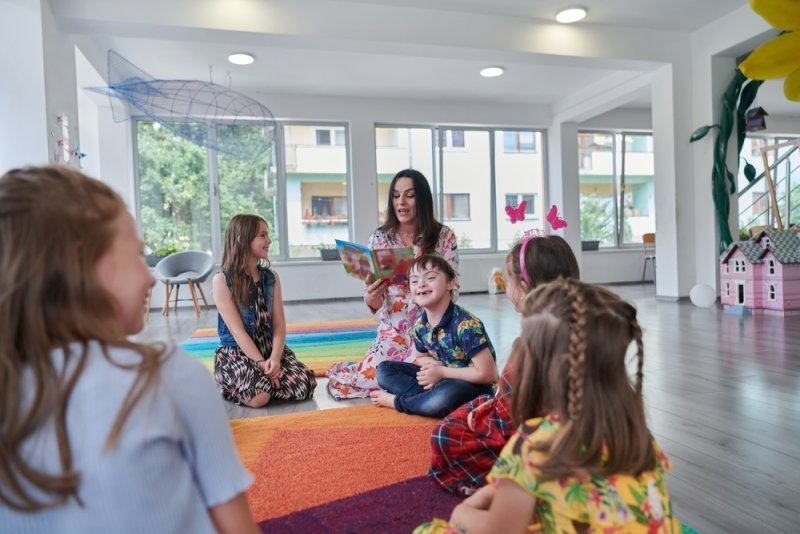
Trust us; when it comes to teaching a toddler or preschool child to read, nothing can work better than reading aloud to them.
5. Ask Questions

This might not seem as creative as other options, but it will definitely help in teaching your child to read.
Asking questions while reading is not only encouraging for your child to interact with the book but also effective in developing their abilities.
The thought of being asked questions will motivate them to focus more on reading and strengthen their comprehension skills.
Suggested Reading: Best Homeschool Curriculum of 2026 to Help Parents Make Smart Decisions
6. Act It Out
One of the easiest ways of bringing excitement to the child’s reading time is to add little drama to learning by acting it out.
You can act out the story you are reading or ask your child to be the teacher and teach you to learn the lesson.
Since children love to act or perform, making a story come to life will keep them engaged and motivated to read. Trust us; this is an ideal way to teach your child to read without getting bored.
7. Use Decodable Books and Structured Reading Apps
Instead of relying on picture-heavy books that encourage word guessing, choose decodable books aligned with your child's current phonics level.
You can also supplement reading time with explicitly structured parent-child co-reading apps like Reading.com or Khan Academy Kids to step through phonics lessons systematically together.
8. Show Your Kid Videos
Harnessing the power of technology will make the reading process enjoyable and motivate your child to improve. Today, multiple platforms have learning videos.
You can play them in front of your child and let them learn through them. Since visualizing is a great way of grasping things faster and remembering them for a longer duration, showing them videos will improve their ability to read.
It is full of interactive, personalized, and fun learning for your child. Believe us, trying this will let you see instant progress.
9. Use Structured Phonics Apps for Co-Reading
If you’re going to use screens, make it count—use phonics-based apps that follow a clear plan. Apps like Reading.com or Khan Academy Kids walk kids and parents through step-by-step decoding exercises, so they build real reading skills—and you don’t have to worry about endless screen time just for the sake of it.
10. Make Play-Dough Letters
Children pick up things much faster when taught in a fun way. And what can be better than play-dough? It is a great tool to teach kids the art of reading.
Buy your kids the dough and ask them to cut out different letters from it. They can also make words using the cut-out alphabet.
This will help them learn the letters while having fun. Trust us, by connecting the feelings with the word, you can let your child grow as a reader.
And finally, reading comes with time and practice. As a parent, you must stay patient with the child and give them adequate time to develop the skills.
Strategy | Focus Area | Recommended Tool / Activity |
Phonemic Awareness | Hearing & manipulating sounds | Songs & Nursery Rhymes |
Systematic Phonics | Letter-sound mapping | Play-Dough Letters & Card Games |
Fluency & Decoding | Accuracy & oral expression | Reading Aloud & Decodable Books |
Guided Digital Literacy | Structured parent-child co-reading | Reading.com / Khan Academy Kids |
Also Read: Parents' Role In Balancing Academics and Extracurriculars
The Bottom Line
We hope that this article helped you learn the creative and effective ways of boosting your child’s reading abilities. If you are looking forward to teaching your child to read, these simple ways will fit into your lifestyle and help you build strong foundational skills while having fun.
But always remember that you are your child’s greatest support. Hence, you should encourage them to read by making it creative and engaging. We wish you many happy hours of reading with kids!
Frequently Asked Questions
When should I start teaching my child to read?
Most kids are ready for formal reading lessons between ages 4 and 6, especially once they show some phonemic awareness. But honestly, you don’t have to wait that long to get started in little ways. Even babies benefit when you point out letters on signs or read together, so pre-literacy skills grow naturally just from everyday life.
How do I spot a learning issue like dyslexia?
If at age 7 or 8 a child still has trouble rhyming, letter names, or blending sounds, despite consistent practice, it's worth noticing. Kids should be doing just 10 to 15 minutes daily for this to be effective - not an hour-long slog! And if your child is bilingual: This is wonderful! If that sounds familiar, reach out to a reading specialist or your child’s doctor for an assessment so you can get help early.
What if my child refuses to read?
Don’t turn reading into a chore. Let your child read what they enjoy—whether that’s comics, graphic novels, or something else off the beaten track. You could even take turns reading pages together. The main thing is to keep reading chill and fun, so it doesn’t feel like homework.
How long should little ones spend reading?
Ten to fifteen minutes a day works well for toddlers and young kids. You don’t need marathon sessions. Short, consistent sessions work better than trying to cram in a marathon reading session over the weekend. It’s all about small, steady steps—not long stretches that test their (and your) patience.
Does being bilingual make learning to read harder?
That’s a common myth, but it’s not true. And if your child is bilingual, that’s a good thing. Over time, children who grow up speaking more than one language have better language/reading abilities. Unlike what most people think, being bilingual isn't a hindrance to them-it's a brain booster.
This content was created by AI